Welcome to Balanced Rocks: Pictures and Stories

Beginning March 16,2010, I began a journey of balancing rocks. I hold to the practice of setting to balance at least five sculptures a day, sometimes, many more. Of these I take lots of pictures and videos. While conducting this adventure, I have been introduced to an incredible unfolding story. Additionally, I discovered this phenomenon is manifesting worldwide. As I post pictures and stories, I found many others similarly engaged and sharing their works. Additionally, as folks come upon me performing my work, many want to find out how this is done and try themselves. This blog shares this work in both pictures and stories. Enjoy

Yin/Yang

Yin/Yang
A seeming impossibility becomes possible

Rock Balancing: The Beginning

On a fine summer day, sometime in August, 2009, I was visiting family in Toronto. Like most folks spending summer in a large city, we used up as much time as we could finding outdoor events that would cool us. One afternoon, we headed to the Beaches section of East Toronto. After spending some time playing in a large sandbox in the shade with my grandkids and some of their newfound companions, we headed to the Boardwalk that extends from Balmy Beach to Kew Gardens. Ella accompanied me, Liam took off with his mom, Natalie. They ventured down the boardwalk, Ella and I headed onto the sand toward the water’s edge. Halfway there we encountered what looked like a small size Stonehenge.

About a dozen sculptures were gathered together in a rough circle. Each was a stack of two or three rocks balanced one on another. The tallest one was slightly taller than Ella, who was small average height for a five year older. All were in the neighborhood of three feet and four feet tall. What immediately jumped out was the precarious nature of the balancing. Most points of contact were miraculously slight. Most seemed to be standing on a point. Two more folks were witnessing this amazing display. We imagined that there must be small metal rods embedded at the point of contact, or else some kind of glue was used. Each of us peered from close low angles to detect what could account for this mystical display. Ella, not being so cautious, toppled one structure over. Luckily, it did not land on her.

I hurried over and picked up the fallen rock. I saw no evidence of a rod or glue. It indeed had been balanced on its pedestal. I lifted it up and tried to place it back where I reckoned it had been balanced. I cautioned Ella, to be careful and not upset any more sculptures and went about the task of finding balance. I was not successful and struggled immensely but did not find the magic spot where stability could be achieved. After a lengthy effort, an attractive Asian woman about my age approached and gently nudged me aside offering to demonstrate her work. She pointed to the spot she would set the stone upon. She called it by a foreign name. To me it looked like a slight dimple.

Placing the small end of the upper rock into that hollow, she deftly and quickly moved it around, slightly twisting and cajoling it into position. The sight of this slender woman with longish graying hair performing an intricate dance with a rock slightly larger than her head emanated calmness. It seemed only the ends of her fingers were used to achieve these small movements. Apparently, equilibrium was close. Shortly she was done and withdrew her palms which naturally assumed an open prayer posture. The rock I had grappled with was majestically resting in its previous stable state. She next went over and reset two other structures, I had not noticed were also amiss. I just took them to be part of the rubble strewn about the beach. Now all the display was standing and providing a small sense of order in our chaotic world.

I never got this woman’s name, but heard her story. She had set this display up for the purpose of taking pictures, one of which she hoped to use for a cover of a book she was publishing. Unfortunately not getting her name makes it difficult to find her book. But I carried away with me the sight of her presentation and the incredible feeling I had witnessed an amazing ethereal event. I also felt an urge to explore this practice.

Rock in the Snow

Rock in the Snow
January in Toronto

Tuesday, September 30, 2008

Firewood for Free

In my years of burning wood, I do not remember ever having to pay out money to obtain firewood. Sometimes it was completely free, other times I had to provide labor of some sort to get hold of it. Often I found the truth presented in the old adage, “firewood provides heat twice.” The first warmth comes when it is gathered, cut, split, stacked and then hauled indoors. Then it warms again when it is burned. This article will briefly explore the various ways that firewood came to me.
It was not until, I moved into a commune in rural Florida in the middle 1970’s that I had a stove that burned wood. Just before the first cold season arrived a truckload of wood was dropped off by the local electric utility. They were constantly clearing right of ways for electric lines to pass. Since not many people heated with wood, they most often dumped and buried tree trimmings to get rid of them. They were willing to drop wood off to anyone who requested it, provided it was not out of the way and on route between their cutting and dumping places. There were no choices and you had to accept what they brought. Our first load was a boon. It contained several sizeable limbs of dead oak that was well seasoned. The bulk however contained sizeable pieces of camphor tree. It seemed the whole tree was brought to us. Burning it provided the nose clearing scents that camphor is noted for and was a special treat to add to our fires.
After Florida, many of us moved to the Ozarks in Arkansas. This area is the timber capital of the Southwest. Much of the oaks were cut off in the early part of the twentieth century and now second growth was being harvested. Besides oak substantial stands of hickory and cherry were being felled. Logs were hauled to the mill and sizeable branches were left laying around. Landowners were glad to have a hand getting rid of this debris which contained sizeable pieces of firewood. Usually the parts being offered were not near roadways. This meant considerable efforts had to be expended getting them onto our vehicles. Normally, our crew would head into the forest with chainsaws and buck up large limbs into carrying size pieces. Once these were loaded up we took them back to our living sites. Here saw bucks, chopping blocks and wood stacks were worked on all through the year in order to have wood for both heating and cooking. Firewood came cheap but considerable effort gathering and preparing it.
After Arkansas, I moved to New England. Firewood was just as abundant but it was also much more desirable and had a larger demand. Winters were colder, and population greater. Wood was sold for a dear price. However, with ingenuity, it was available for the price of labor or trade. Land clearing, just like timbering resulted in large quantities of branch material. To have this cleared, folks were willing to let it be hauled away gratis. Other opportunities presented when part of the payment for firewood involved a work exchange to provide cutting, splitting and stacking services. This type of work was pleasant in cold season when work also heated and provided something to do when other outdoor opportunities were drying up. I felt especially grateful to have steady work exercise prospects.
Additionally, everywhere trees are susceptible to storm damage. When this occurs, owners not only welcome help clearing their property of debris, but are often willing to pay to have their wood hauled away. Sometimes large storms turn into blessing. Hurricane Bob wrecked havoc on the trees in southern New England in August 1991. Luckily flood damage was minimal, and property damage mostly confined to vegetation. I was fortunate to find considerable paid work clearing away remnants of this damage. As a bonus, I garnered over 12 cords of hardwood for future fires. By mid fall, I had this hauled home, stacked it up, ready to be split, brought indoors and used. This provided all our heat for the next four years.
I just moved to upstate New York and do not have a good woodstove for heat. My current residence has a fireplace that is more suitable for providing atmosphere than heat. It seems there is enough firewood around the neighborhood that can likely be obtained using my previous wood gathering techniques. This will also give me time to scout out the area finding other sources toward the day when I can again possess an efficient wood burning stove.

©

Monday, September 29, 2008

Burning Rope

For a time, I lived with Willow and her two kids in Gainesville Florida. Jeremy and Kelly were school age and enrolled in an alternative school. They were home schooled for a good part of their day. That meant one adult was home most of the time. Willow worked occasionally as a waitress and other times worked at home as a seamstress. My work was home services and I was self employed. Many of my projects were carried out at home so I could do my share of adult supervision. Money was tight, but our rent was paid and we ate well. Nonetheless, it seemed depressing at times considering our lack of funds and how that curtailed our spending habits.
On day, I was home. I had not much work of the kind that would provide income, so I concentrated on a clean up. We had a burn pit in the back yard where we got rid of yard debris and trash. We composted vegetable matter but burned most of the rest. Since I was launching a massive clean out, we had a lot for the fire. The kids were having a home school day. Jeremy was helping me, Kelly stayed indoors working on a school art project. I appreciated his help.
We had a lot of packing materials and scraps from projects to haul to the fire. It was not a large blaze and we just kept adding to it. I must have been lagging and experiencing a slight depression pondering my lack of funds. It made me drag along and threatened to turn our project into a full day affair. At one point, I carried a box full of debris up to the fire and noticed Jeremy dragging a piece of rope through the coals. As he passed it through it would catch fire. Upon withdrawing it, he would beat it against the dirt to extinguish it. Once out, he would pass it through the coals again and repeat the process. I sharply asked him, “What the hell are you doing?”
Without pause he answered, “ I am a rope burner.” I quipped, “Is that so? Tell me about being a rope burner.” Jeremy explained he was a part of a small element that had the job of burning ropes. It was kind of an exclusive fellowship with not many members. Being drawn in I asked, “If there are not so many of you, I guess you must get paid pretty well.” He nodded and agreed, “Yes, we get five hundred an hour and have a strong union.” Quite impressed with his imagination, I asked, “ Can I get a job with you?” “Sure, I can take you on as an apprentice.” Jeremy offered. That surely lifted my spirits and that is how I joined the international brotherhood of rope burners. Since that day I have never suffered depression as a result of a lack of work. I can always find a rope to burn.

©

Saturday, September 27, 2008

It’s a Gas

In teaching about fire, the beginning statement I make is “Neither wood, coal, nor paper burns.” I am greeted by puzzling looks that beg an explanation. “ I go on, “ Solid material does not burn. What you see are gases oxidizing in the final process of combustion.” There are three stages in the development leading to rapid oxidation. The first is applying heat that drives gases from combustible material. The second step requires mixing oxygen usually in the form of common air with the combustible gases. Lastly a spark is needed to ignite the air/gas mixture producing flame and heat. If enough combustible material is present, a sustainable cycle takes place. The heat produced drives off more gases, the constant flame provides ongoing spark and hot gases expand creating an air current that draws fresh air, hence oxygen, toward the gases and flame.
As you gaze at fire, you give witness to this ongoing interplay that produces combustion. The dancing flames show evidence of burning gases. Notice that nowhere is the combustible material, be it wood, coal or paper, aflame. It may glow red which is a sign of its heated state and conversion to gases. Flame displays its lively nature as it stretches out engulfing unburned gases. In the process the quantity of combustible material reduces. It has been converted to burnable gases; its unburnable component is ash. Some is light enough to be lifted away on the upward flowing air currents. Heavier ash sinks to a small pile left after the fire has extinguished.
For all material, this is the fire process. The difference is what temperature is necessary to drive off combustible gases. Gases that are combustible at normal air temperature only need spark. These gases are hazardous to handle. Even liquid gasoline does not burn . However, it’s temperature to convert to burnable vapors is lower than temperatures found outdoors on a mild day. Then spark is all that is needed to begin the inferno. Other burnable materials have combustion temperatures in the range produced in ordinary fires. Other materials will not combust in these fires. Examples are most metals, ceramics, stone, and rock.
But even these things can burn in conditions well beyond the ordinary. Some have combustion temperatures quite high. Even metal can turn to vapors at temperatures high enough. These temperatures are not normal and only found in controlled environments like science labs, deep furnaces, or nuclear experiments. At times, certain other elements need to be present to catalyze burning. They conditions may also occur in the bowels off the earth where high temperatures and pressure produce fires that have powers of transmutation. The ashes from these fires are known as gems and sometimes called precious.

©

Friday, September 26, 2008

Franklin Comes Alive

A Christmas storm in 1977 ushered in a long, cold, brutal winter. Living in a beach house on the Connecticut shore of Long Island Sound meant we had to find ways to supplement a fireplace and space heaters to stay warm. Smitty brought in an old Franklin stove. Although these are drafty and not noted as efficient stoves, it was a large step up from a fireplace. At least the heat it produced was contained within the house and not drawn up the chimney. We even constructed a new metal chimney to vent it out the side the house. This enabled us to seal up the fireplace and keep the heat from wood fire indoors.
Since, I was not employed, my task was to gather, cut and chop firewood. I also tended the fire and made sure the house did not freeze. It seemed that all thorough the month of January the temperature never got above the low twenties. Besides that a strong wind out of the northwest seemed constant. The beach side of the house faced south and was out of the wind and usually in the sun. This is where I set up a station to cut, chop and stack firewood. It was also easily accessible to the living room where Franklin Stove resided. The Christmas tree that was in the house for that celebration ended up on the beach near our pile of kindling. It had dried in the sun almost a month when our other kindling supply evaporated.
My routine upon awakening was to stoke up embers left from our overnight fire and add kindling to restructure a blaze to welcome folk in the morning as they rose. On the first day, that our kindling supply was gone, I took out an ax and chopped the old Christmas tree into pieces small enough to cram in the stove. And that is just what I did, crammed the stove full of dry brittle spruce tender. After loading it up, I shut the doors and stood back waiting for the kindling to ignite on the glowing bed of embers. While waiting, I stepped out to gather some firewood to add to the fire once it got going. When I came back inside with an armload, I was greeted by an alive Franklin. All the tender kindling was ablaze The heat it generated caused all the seams to open and the sides of Franklin to warp outward. Belching sounds emitted as Franklin whooped to gather oxygen to fed its raging inferno.
Each time it took a gulp, the stove seemed to move slightly. It seemed to be alive and straining to move itself outdoors to find more air and fuel. Luckily, the fuel provided by the chopped up Christmas tree exhausted rapidly. Just as hastily as it came alive, Franklin passed away. The belching , wheezing, and leaping about ceased. As the metal parts cooled down they returned to their previous shape and the seams closed up. When I opened the front, the remnants of the fire were ready to receive the pieces of wood, I had brought to sustain it. I placed them inside and sat back to observe Franklin do the job he was designed to perform.

©

Thursday, September 25, 2008

My First Campfire

We already had television to provide us with images of cowboys and the like perched around a campfire. Here they did their cooking, told stories, and huddled under their blankets to keep warm. All of our campfire experiences were gleaned from these television dramas. One day, I along with two friends, Michael and Drew decided o have a campout. Michael’s folks let us have use of a large field behind their house. Camping out meant we would build and maintain a campfire.
We already had plenty of experience building fires. We gathered a quantity of wood and constructed a sizeable one. We had no experience cooking, even indoors. So our meal consisted of fruits, snacks and other cold goodies. We did know about roasting marshmallows, We cut a few sticks to hold marshmallows to the fire and gobbled down a few of these toasty treats before settling in. We had maintained a sizeable fire and still had ample wood to burn through the night.and provide heat for sleeping out in the open. Taking our cue from soldiering movies we posted a guard, whose duties included tending the fire. Even in Florida it was a chilly night and we figured it a matter of survival to keep our fire going.
With the first guard posted the other two of us fell to slumber. At some time in the night I was awakened for my guard shift. I tiredly maintained a presence watching fire. By the time our next shift was due, we agreed to abandon guard duty and just put the remaining wood on the fire and sleep the night through. We all managed to get enough warmth from the final blaze that we all fell in deep sleep. At some time in the middle of the night. I was awakened by a powerful acrid smell a sense of being too warm. I found my feet had swung into the glowing embers. Likely they were cold and sought heat on their own. My wool blanket was smoldering. That was the source of the powerful smell. I got up scrapped the burnt part of my blanket away, bundled back up and went back to sleep.
Through the night, I must have alternately felt cold feet and smelt bad smells. Several times I awoke to the same scene, my feet snaked over to the barely glowing embers and my blanket again smoking. By morning my fitful night ended and I discovered the nice US Army blanket borrowed from my Uncle Bob, pretty much charred beyond use. My two campmates suffered no such loss. Apparently their sleeping bags kept their feet enclosed and warm throughout the night. I was disappointed by my first camping experience, and felt regret I ruined a fine blanket I cherished. I determined that should I try camping again, I would obtain a sleeping bag, and find a way to stay warm besides letting myself crawl into the fire.

©

Wednesday, September 24, 2008

Awakened by the blaze

Winter in Louisiana can seem just a cold as in the deep north. Houses do not possess the same degree o tightness nor insulation. The old tenement shack we rented also had no heat source apart from an electric space heater. Our well, out front, was at the bottom of a three foot hole. Down there, our water pump was exposed to the cold, which sometimes can get frigid enough to freeze water pipes until they rupture. To prevent that we had a 150 watt light burning all the time at the bottom of the hole. It probably worked since we suffered no broken pipes all winter.
Most likely since we lived in the deep south, we also lacked most gear that folks in the north wore in winter. I noticed no scarves, long underwear, woolen hats, nor heavy coats. Sweaters, long pants and heavy socks were the most used winter clothing. Damp mornings put a chill on us that usually was burned away by the sun when it arose. Days that remained overcast never seemed to warm, yet we did not suffer bone chilling cold, just uncomfortable dampness. At night leaving the space heater on did not seem safe, so we huddled under lots of blankets and comforters. Once tucked in it did not feel cold. The only problem presented when trying to get out of bed in chilly morning.
One night, I was awakened by an uncomfortable heat. I was puzzled at first since it seemed warmer than any sultry nights of summer. Then I noticed a strange glow coning around from the far side of our house. I got up to investigate. I noticed immediately it was not only warm, but unbearably hot. Once I got to the living room, I realized the house across the street was ablaze. The fire department was just arriving, but were unable to do anything except spray water at adjacent properties to keep them from igniting. The roar of the flames was intense and the heat issuing from the fire almost made it impossible to look in that direction. By now our housemates were awake and marveling at the intense inferno across the street.
We were amazed that temperatures were high enough to cause the electric wires strung along the road separating our house from the one on fire to sag until they reached the ground. Once in contact with the ground, sparks issued and our neighborhood was plunged into darkness except for glow of the yet to diminish flames. It was probably over and hour before the roof collapsed, dragging most of the high reaching flames with it to the ground. Finally the heat began to quell. We all got back to our beds and awoke the next morning to normal damp chilliness. The house across the street was reduced to a still smoldering pile of rubble. The electric lines had raised them selves off the ground and our electricity was restored. I sensed I had dreamed about the raging fires of Hell.

©

Tuesday, September 23, 2008

Still Burning Trash

During the oil boom of the early 1980’s, I moved to Louisiana and took advantage of the building construction surge. Several of us lived together in a rural setting outside Lafayette. This area bounds the Atchafalaya Basin which defines the western edge the Mississippi Delta. The landscape is decidedly flat and drainage ditches crisscross the area to remove rain runoff, dumping it into canals that head toward the delta swamp. The ditch next to our house looked blackened. This puzzled me. I next noticed that many stretches of ditches had similar look. It appeared that ditches caught on fire. After settling in, we discovered that garbage was not collected in this area and it was several miles to a collection point.
Convention established that trash was placed in the ditch and burned on a regular basis. Trash fires happened on a daily basis. We got used to smelling incendiary garbage. At first, we were not used to this custom and gathered our trash and hauled it away. It was burdensome and we also discovered the site where we hauled it also burned it. It just burned larger quantities. It seemed no matter what, our trash would be burned. We gave in and piled it in our ditch. About once a week we lit the pile and tended the fire. It pretty efficiently got rid of the bulk. To our advantage, we could dispose of all our work related garbage too. This added wood and other building materials to the pile.
Neighbors did not seem to mind the smells created. Everyone seemed used to breathing the fumes from all the various materials being turned to smoke and ash. Later on we discovered another local solution to solid waste management. When a rain occurred, the ditches would be swept clean of all remnants of fire. Whatever had not been lifted away as smoke or fly ash was washed down to join the murk in the Mississippi Basin. Our collective sensibilities about despoiling nature collided with local custom. More deep seated than our philosophy was the reality of living in a area that for years had collected the sediment of anything poured into the vast Mid American drainage stream.
When the scope of that system was considered, the small amount that we added seemed insignificant. We lived near the edge of a catch basin that gathered water from a wide ranging area. Rivers that flowed into the Mississippi sprang from places as far as Colorado, Montana, Minnesota, Pennsylvania, and traversed all the states in between. What ever was washed into the streams along the way, settled in our neighborhood. All along the coast and out in the swamp platforms were drilling deep into the earth to remove sedimentary ooze that had no doubt gathered and settled eons ago. Today’s workers were just as happy adding to that sedimentary collection that may provide future fuel. It appeared the mindset of this area condoned open burning. This area also is home base to the vast worldwide oil exploration empire, which make allowances for bringing fossil fuels from the bowels of the earth and burning them on the surface.
We did not stay long in this area. The boom tapered off and eventually our crew headed back to other parts of the country. I became more sensitive to the effects of burning. To help my process of coming to terms with the element of fire, I approached the native outlook of taking responsibilities for our actions and acknowledging our connection with our mother--the earth. To help ease the feelings of the harsh reality of how out of balance we were becoming with Mother Nature, I for a time turned to another type of fire that seemed to assuage these feelings. I began to consume large amounts of firewater.

©

Monday, September 22, 2008

Burning Trash

When I was in first grade, we lived in rural Florida. My first job was to clean my dad’s shop after the workers left. He built wooden boats and in a day turned out a considerable quantity of sawdust, wood scraps, paper waste, packaging materials and a small quantity of chemicals from the paint shop. My duties began with sweeping up the floors and cleaning out the sawdust hampers. We had a wheelbarrow which I would load up and haul to a burning pit we had just outside the chain link fence near the back gate. My last duty before locking the gate was to build and tend a fire that consumed our waste. Everything was burned.
First off, I stacked and arranged the pile. This experience taught me much about combustion principles. First, to have sustained fire air has to get to it. Sawdust even though it is combustible can smother a fire by preventing air from reaching the burn. I learned this when I dumped a whole load on a fire already burning well. Once smothered it would continue to smoke but all flames would extinguish. If I poked it, brief flame would appear but quickly go out after I withdrew the poker. If I left the fire, by morning an intact pile of charred sawdust would still be smoldering.. But by then all chance of flame would be gone since heat had left. On the other hand if a handful of sawdust is thrown into the air above a roaring blaze it almost explodes in flame. Plenty of air among the dust particles makes for an volatile mixture.
Next, I learned that some things may not have been meant to be burned. Once in a while a small amount I put it the fire would release a cloud of noxious smoke. Mostly, it was thick black smoke that concerned me. Although she never complained a neighbor whose house was directly behind the shop would often be subjected to dense smelly vapors rolling across her property. I must have intuited that this was not good. Close by, I could tell by the stinging in my nose that what was being produced should not be shared, besides not likely being good for me.
I learned that with a hot fire small quantities could be rapidly burned without producing toxic clouds. But mostly, I gathered some elements were not meant for my fire and would be saved for hauling to a burial dump.
Lastly, I learned that some stuff doe not burn up even in a hot fire. Even small pieces of metal would not be consumed, ceramic and glass likewise. Sometimes these items would melt and change shape but never be burned up. They also glowed when subjected to high heat for a spell. I felt fortunate to be able to conduct fire experiments as part of my tasks. I took to making hot spots in the fire. In these places I conducted tests with most items that did not burn. I learned that such objects retained heat long after being removed from the furnace, often times hot enough to cause burns or ignite fires. I suppose these experiments taught me much about fire safety.
Not only was I lucky to have a chance to play with fire, I learned the joys of just watching a it burn and letting my mind drift to the accompaniment of the moving light show. We did not have a television back then, but I do not think I missed much. I learned that there is always a good show to be had just watching flames perform their magic.

©

Sunday, September 21, 2008

Another Kind of Steam

Water that turns into steam when its temperature reaches the boiling point provides an analogy for other states of volatility. Apparently, human behavior has mimicked steam often enough that various phrases describing human behaviors have been introduced into English language. Examples are “I’m steamed up; I’m going to let off some steam; I’m just going to simmer; I‘ve reached my boiling point; or I‘m boiling over.” These are but a few that refer to human emotions, often anger, reaching an explosive state. This brief article will try to draw comparisons of the physical characteristics of steam to the less well known mechanisms that push human behavior.
I will give conjecture and a brief example from my experience in an attempt to analyze times when humans lose control and explode. One of the points that give rise to danger when dealing with steam is when there exists no pressure relief valve or when it malfunctions. . A similar danger may exist when humans try to bottle up and contain emotions that may produce pressure when not vented.
Just as steam relief valves vent extra pressure, humans have developed means to “let off steam. Two that come to mind are focused physical exertion to bleed off bottled up energy or calmness exercises that are designed to turn down the internal heat that builds stress. When these exercises are not in place or somehow not working, the danger of a human explosion comes to bear.
Like steam pipes that have gauges reading pressure and providing alerts that should be heeded, humans would do well to monitor their state in order to intervene upon an approaching angry outburst. Unfortunately human gauges are not as easy to read as mechanical ones. But usually with practice and helpful feedback, it may be possible to detect impending problems based upon precursor events unfolding. Of course, this assumes that a person is looking to curb violent outbursts. If they are not, it may pay those nearby to attend to reading the signs of looming pressure buildup so they may take appropriate evasive maneuvers. I hope that if I was near a pressure cooker that was showing sign s of going off, I could prepare an exit.
On incident that comes to mind, when I took this action occurred during a bout of cabin fever while living in rural Arkansas. I was not aware that being cooped up all winter can place inevitable pressure on human relations. I, Willow and her two kids had spent the whole winter cooped up with no electricity, no indoor plumbing, nor running water, and our only source of heat was a wood cook stove. There was certain romantic charm spending a winter in this gorgeous natural setting. However, probably neither of us regularly had pressure outlets, nor were we familiar with detecting coming flare-ups. One morning the pressure erupted.
My custom was to rise early, make a fire, and prepare a pot of coffee. Usually, I would sit enjoying my coffee, while waiting for Willow to arise and have breakfast and launch the kids off to school. One morning, Willow awoke in an agitated state. A heated discussion ensued. I remained in my chair holding my cup. At some point Willow placed her hand on my shoulder and started shaking it to make a point. She was unaware that her jerking my shoulder was spilling hot coffee on my wrist. I was suffering burns. When I exploded, I flicked the remainder of my cup up at her. It covered the front of her blouse. Fortunately she was not burned, but her pressure also reached explosive state.
Willow went over to the stove, picked up the whole pot of coffee and headed back to my chair. I saw her coming and detected a fit of anger in her stance. I sensed danger and automatically rose up and knocked the pot out of her hands and onto the floor. I rushed to her side and grabbed her in a bear hug, lifted her off the floor and carried her outside. There I remained in an embrace afraid if I let her go , we may start swinging at each other. In a few moments, pressure seemed eased, and I asked,, “If I let you go, can I go inside and get a few things, so I can get away for a day or so?” She agreed. Hastily, I gathered a small pack and walked down the road. Besides the small burns on my wrist, injury had been avoided. We both learned the necessity of not letting pressures build to unsafe levels. To this day, memory of that event provides me with an example of what may occur should I not attend to my pressure gauges.

©

Saturday, September 20, 2008

The Nature of Steam

Under normal atmospheric conditions water is liquid. When temperatures fall to 32 Fahrenheit (F) under normal pressure, water turns to ice -- a solid. Under the same pressure conditions when temperature reaches 212 F, it turns to steam -- a gas. This temperature is referred to as the boiling point. Liquid water on the earth’s surface cannot exist above this temperature. In its gaseous state, steam can continue to absorb more heat. This gives steam properties that can be useful, it also renders steam a danger.
Because of its heat carrying capabilities, steam is used for heating purposes. Under confinement, as steam is heated above its boiling point, its pressure increases. Therefore, steam carrying pipes and radiators must be able to hold great pressures. Whenever these systems fail, disaster looms, usually in the form of an explosion. Because of this danger, steam heating has largely been replaced by hot water and heated air heating systems. Steam is by far the most efficient, but its risk seems not acceptable. Steam under pressure also has another use, as it has an incredible ability to penetrate porous material.
Pressure cookers are an example of steam being used in this manner. Under pressure steam penetrates deep into food, carrying its heat and cooking quickly and efficiently. A safety feature of pressure cookers are built in pressure relief valves. These release excess steam pressure from confinement and into the air. Despite warnings to keep this valve clear, dangerous explosions have occurred when it gets blocked. Kitchens have seen metal cookers turned in shrapnel that has killed the cook. For this reason, many have abandoned pressure cooking using steam pressure.
Another use of steam’s penetrating abilities are found when working with fibrous materials. Wood for example is subjected to steam to help it absorb moisture making it more pliable. Various wooden products use steam to make them bendable. After being held in a bended state and dried, wood retains the bent shape. Common examples of this are found in boats, furniture and curved building frame construction. Another fibrous material commonly subjected to steam is cloth. Steam ironing is the example. Here, again, steam brings moisture deep into the fibers rendering them pliable. Pressure from the iron flattens the fibers and cloth and when dried they retain their flattened shape.
In nature, steam exists under tremendous pressure deep in the bowels of the earth. Water meeting earth’s molten core, renders it into steam. Because it is deep in the earth this steam is held under incredible pressure as it absorbs more and more heat. These steam pockets are called superheated. In some places, Iceland for example, these deep steam pockets naturally vent near the surface. This occurrence is used for heating purposes and gives an inexpensive source of energy. In other places where natural vents do not occur near the surface, pipes are drilled down to steam pockets. These deep troves of steam come to the surface and its pressure used to drive electricity generating turbines. As its pressure and heat is dissipated this steam returns to its liquid state and often is used for irrigation. For this reason, many steam exploratory projects are sited in arid locals.
Whether natural or man made, fires are constantly tended to produce this cycle of water being taken from its liquid state to gaseous and back to liquid. Water is not the only liquid that is brought to its boiling point turned into a gas and its properties changed before it is condensed back into its liquid form. Most liquids have a volatile gaseous state and heat properties are a constant part of this equation. Therefore fires of some sort are integral to our physical nature.

©

About Me, Part One

My photo
Rock Balancing: The Beginning. What began as a journal of my travels took a hiatus when I began to settle in Ithaca NY. In the meantime, I took up the practice of setting rocks to balance. I returned to my blog to begin recording this story

Part, The second

On Easter Sunday Morning, 2008, I made a decision to settle in the Ithaca New York area. At the same time, I decided to continue to post my blog, However, the stories now will come from the archive stored internally. These will be the stories I gathered while on previous journeys and never entrusted to paper. The date of each posting will not reflect the date of the story being related but will mark the date that narrative got inscribed.

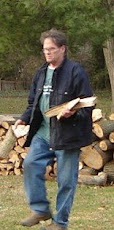
Carry wood

Carry wood
33 years later

Part: The third

I took a brief hiatus from my daily blog writing. I did not know the direction it would take. part of me thought I would abandon it. It turns out I missed it. The old title "On the Road Again' is no longer apt. It appears I am settling. The travel stories will age to a point, when I will probably resusitiate them and do something with them. I dusted off some old stories and begin this new series.
Thr first is one was written two years ago. I edited it and begin again a series that is more apropos to someone settling in upper New York State. They are meant to warm, amuse, educate and sometimes inflame.